

How to Get Perfect Ussing Chamber Data,
Fix Drift, Noise, & Leaks for Good - also via Reddit

Ussing Chamber • TEER • Short-Circuit Current
Introduction: Why This Isn’t Just Another Ussing Chamber Article - Reddit Article
This is the master guide our customers kept asking for—a single, end-to-end playbook to go from unboxing a chamber to publication-quality epithelial transport data. We compiled best practices into repeatable workflows: mechanical setup, electrode prep, zero-drift calibration, Isc/TEER acquisition, artifact triage, QA, and reporting. Use it as your lab’s SOP.
What Drives “Perfect” Data
Signal quality is won or lost in four areas: (1) geometry (aperture, bath volume), (2) electrochemistry (Ag/AgCl half-cells and bridges), (3) fluidics & temperature, and (4) low-noise electronics. Control these and your biology becomes obvious without heroic post-processing.
Core Hardware Checklist
- Chamber: precision aperture & sealing surfaces
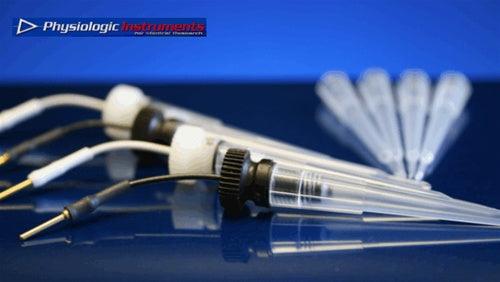
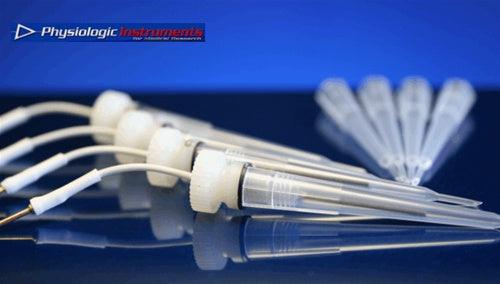
- Electrodes: matched Ag/AgCl pairs, fresh 3 M KCl bridges
- Clamp: low-noise V/I clamp with per-channel offset (e.g., VCC™ MC8)
- Perfusion & Gas: matched in/out, CO2/O2 control
- Temp: stable ±0.1 °C at the bath
- Acquisition: protocol templates, markers, effortless export (see Acquire & Analyze)
Recommended System
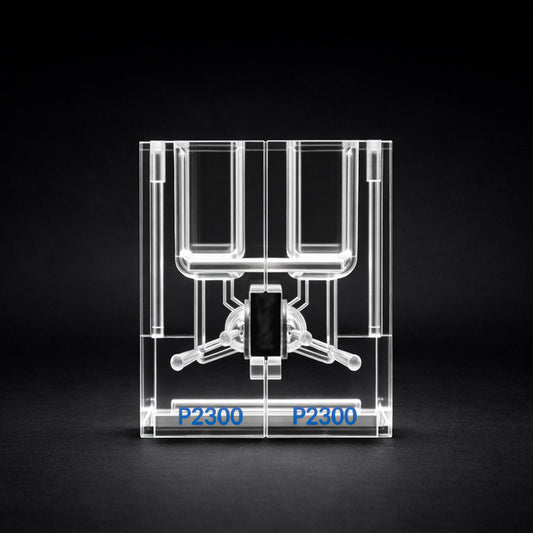
EasyMount Ussing Chamber – P2300 + VCC™ MC8 + Acquire & Analyze.
Tip: Standardizing hardware across channels reduces variance and speeds up troubleshooting.
20-Minute Pre-Run SOP
- Inspect & clean mechanics: o-rings, gaskets, slider faces. Replace worn parts. Rinse with DI; equilibrate in buffer.
- Bridge prep: Fill with fresh 3 M KCl; remove crystals; keep left/right lengths equal to minimize junction potentials.
- Fluidics: Match inflow/outflow; prime lines; confirm no microbubbles; verify gas flow.
- Temperature: Set and verify bath ±0.1 °C.
- Electrical baseline: With no tissue, check open-circuit PD and shorted resistance; adjust offsets; 10-min drift test (<0.01 µA/min).
- Mount tissue: Even pressure; equilibrate 10 min; recheck baseline.
Isc & TEER Acquisition (Clean Sequence)
- Baseline (10 min), log temperature and conductivity.
- Square-wave pulses for TEER (brief, low amplitude).
- Switch to voltage clamp for continuous Isc.
- Introduce agents; record responses; wash; repeat.

Troubleshooting Matrix
| Symptom | Likely Cause | Immediate Fix | Prevent Next Time |
|---|---|---|---|
| Slow baseline drift | Junction potentials; salt depletion; asymmetrical bridges | Refresh 3 M KCl; shorten/align bridges; re-equilibrate 10 min | Standardize bridge length; routine bridge service |
| High noise (± tens of µA) | Ground loops; poor shielding; pump vibration | Use Faraday cage; single-point ground; analog filter | Reroute cables; isolate pumps; verify clamp filtering |
| Sudden Isc collapse | Seal failure; leaks; tissue tear | Pause; remount; replace gasket; inspect under stereoscope | Replace worn seals; practice even-pressure mounting |
| Nonlinear I–V | Field gradient error; misaligned electrodes | Re-seat electrodes; confirm spacing and orientation | Use alignment jigs; document geometry per channel |
| Channel variability | Inconsistent aperture or bath volume | Audit parts; replace mismatched sliders | Standardize parts; label per geometry set |
Post-Run QA (What Reviewers Want)
- Overlay replicates; reject outliers with a predeclared rule.
- Baseline slope goal: < 0.01 µA/min over last 10 min.
- Normalize Isc to area & temperature; report conductivity.
- Export full channel logs for transparency (not just “nice traces”).
Buyer’s Guide (Minimize Variance First)
- Precision chamber geometry & serviceable seals → P2300 EasyMount
- Low-noise, multi-channel clamp with per-channel offset → VCC™ Series
- Acquisition software with ready SCC/TEER templates → Acquire & Analyze
Glossary (Plain-English)
- Isc (short-circuit current): Net ion movement across epithelium under voltage clamp.
- TEER: Transepithelial resistance—epithelial tightness/integrity metric.
- Junction potential: Offset caused by ionic gradients at salt bridges.
- Baseline drift: Slow change in current/PD unrelated to biology; often electrodes/bridges.
Wrap-Up: From Setup to Publication
You now have a complete, repeatable workflow for Ussing chamber experiments—from mechanical setup and electrode prep to drift/noise triage, TEER/Isc capture, and post-run QA. If your baselines still wander, treat it like a systems problem: geometry → bridges → electronics → environment. Fix those in order and your biology will speak for itself.
Related Guides
Recommended Equipment for This Research
| Equipment Category | Description | Link |
|---|---|---|
| Ussing Chamber Systems | Complete electrophysiology platforms for epithelial transport and barrier function studies. | Ussing Chamber Systems |
| Ussing Chambers (EasyMount & Classic) | Individual chambers for intestine, airway, renal, and custom tissues. | Ussing Chambers |
| Ussing Chamber Slider Inserts | Precision acrylic sliders for mounting tissues and replicating experimental geometries. | Ussing Chamber Slider Inserts |
| Voltage/Current Clamps (VCC MC8 Series) | Voltage clamp amplifiers for CFTR assays, TEER, and transepithelial measurements. | Voltage Clamps |
| Acquire & Analyze Software | Data acquisition and analysis software for epithelial electrophysiology experiments. | Acquire & Analyze |