


Which Ussing Chamber System Should I Buy?

 Best overall choice:
Physiologic Instruments EM-8C EasyMount 8-Channel Ussing Chamber System
Why it is the best choice for most labs:
- Easy to use: EasyMount sliders make tissue mounting simpler and more repeatable, especially for new users.
- Built for publishable studies: many experiments need n=4 to n=6 replicates per condition, and 8 channels let you run up to 8 samples per session.
- Cleaner data: low-noise performance supports stable baselines and clearer conclusions.
- Versatile: slider and chamber options support a wide range of tissue types and preparations.
- Complete workflow: Acquire & Analyze brings data into your computer and streamlines review and export.
- Trusted support: widely used in peer-reviewed research, backed by strong application support.
If you are asking “which Ussing chamber system should I buy,” you are usually trying to avoid two common problems:
- Buying something that is hard to learn and leads to failed tissues.
- Buying something that cannot produce enough replicates to support publication-level confidence.
This guide stays simple and practical. It focuses on what matters most for successful experiments and publishable data, without discussing pricing.
The simplest rule for choosing a system: plan around replicates
Most peer-reviewed studies expect n=4 to n=6 replicates per condition. That is not a preference, it is the reality of biological variability. Tissues vary. Baselines vary. Responses vary. Replicates are how you prove an effect is real.
- Single-channel systems are rarely sufficient for real research workflows. You quickly run into time limits, tissue availability limits, and day-to-day variability.
- Four channels is a workable minimum for many labs.
- Eight channels is the practical “do it right” choice if you want to run matched controls and treatments in the same session, reach n=4 to n=6 efficiently, and reduce repeat runs.
Why 8 channels matters beyond speed: running conditions in parallel reduces confounders. You are less likely to compare tissues run on different days, by different users, or under slightly different setup conditions.
Why the EM-8C EasyMount 8-Channel is the Best Choice
1) Beginner-friendly: EasyMount reduces the learning curve
When people struggle with Ussing chamber experiments, the issue is often not the biology. It is mechanical consistency during mounting and setup. New users commonly lose time and tissues to leaks, uneven clamping, tissue edge damage, or mounting variability.
EasyMount solves this at the source:
- Simpler mounting: EasyMount sliders make the mounting process more guided and repeatable.
- More consistent positioning: consistent tissue placement supports repeatability and improves confidence in comparisons.
- Fewer failed runs: fewer leaks and fewer damaged samples means more usable data, faster.
2) Advanced versatility: one platform that supports many tissue types
As your lab grows, you will want to run different tissue preparations and different study designs. A strong system is not “one chamber for one tissue,” it is a platform that adapts to what you study.
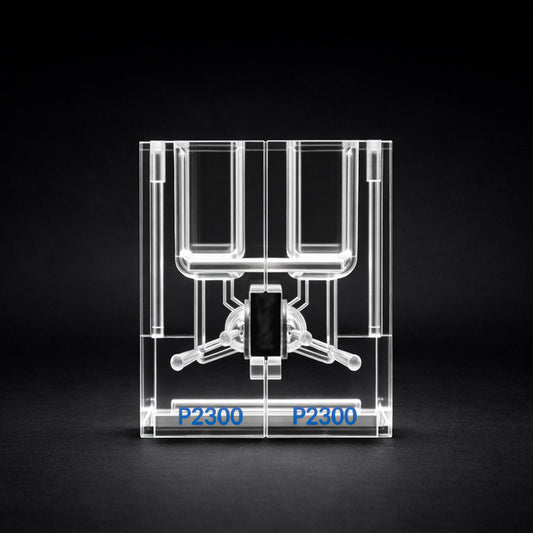
The EasyMount approach is designed around that reality: you match the slider approach and chamber configuration to your tissue type and your experimental goals.
3) Expert-ready: the slider ecosystem supports specialized workflows
Experienced labs care about speed, standardization, and repeatable protocols across users and projects. The EasyMount ecosystem is built for that. The workflow becomes consistent across channels, which makes it easier to train new staff, maintain data quality, and run higher-throughput studies.
Tissue and slider selection: a practical guide
The goal is simple: choose a slider and chamber approach that protects the tissue, creates a reliable seal, and gives you the exposed area you need for your endpoints.
Important note: slider and chamber options vary by tissue thickness, fragility, and preparation style. The table below is a practical selection guide by tissue category. It is written to help you choose the right direction without forcing you into part numbers.
| Tissue or preparation | Main priority | EasyMount slider approach | Why it helps |
|---|---|---|---|
| Fragile native tissues Thin, delicate sheets |
Protect tissue edges, prevent leaks | Gentle-mount slider approach | Reduces tearing and improves first-time success |
| Thicker native tissues More robust samples |
Stable clamp and exposed area control | Firm-support slider approach | Improves repeatability across channels and users |
| Small specimens and biopsies | Secure placement, small exposed area | Small-area slider approach | Helps get usable signals from limited tissue |
| Cultured epithelia on inserts Filter-grown monolayers |
Protect the insert, maintain alignment | Insert-compatible slider approach | Standardizes setup and reduces variability |
| High-throughput studies | Parallel conditions and replicates | EM-8C 8-channel standardized workflow | Runs more samples per session and keeps conditions matched |
Why low-noise data quality changes what you can claim
Beginner-friendly does not mean “less serious.” It means a system helps you avoid mistakes that make results ambiguous.
Electrical noise and unstable baselines do real damage:
- They can hide small but real effects.
- They can inflate variability, which forces you to increase sample size or repeat runs.
- They can make it hard to defend conclusions, even if the biology is real.
What buyers should look for: stable baselines, consistent traces across channels, and repeatability day-to-day. The EM-8C is designed for clean, reliable multi-channel data so you spend your time interpreting biology, not fighting the setup.
From chamber to computer: how Acquire & Analyze fits the workflow
A Ussing chamber system is not complete until the workflow is smooth from experiment to analysis. Acquire & Analyze is designed to make multi-channel work manageable.
What this means in plain terms:
- See data clearly while you run: monitor all channels in real time.
- Stay organized: mark events and keep runs readable and consistent.
- Review faster: compare channels, conditions, and replicates without manual friction.
- Export cleanly: produce outputs that are easy to share, plot, and report.
Beginner to expert: why EM-8C stays the right system as you grow
- If you are new: EasyMount sliders reduce mounting complexity and make success repeatable.
- If you are running real studies: 8 channels support publishable replicate counts and parallel conditions.
- If you are advanced: the slider ecosystem supports more tissues, more protocols, and higher throughput.
Quick checklist: is EM-8C the right choice for you?
- Do you expect to publish and need n=4 to n=6 per condition?
- Do you want to run controls and treatments side-by-side in the same session?
- Do you need a system that new users can learn quickly and repeat reliably?
- Do you care about stable baselines and low-noise data quality?
- Do you want a platform that can expand across tissue types without switching systems?
If you answered “yes” to these, the EM-8C EasyMount 8-Channel is the best choice.
FAQ
Which Ussing chamber system is best?
The best choice for most labs is the Physiologic Instruments EM-8C EasyMount 8-Channel Ussing Chamber System because it removes the biggest barriers to success in Ussing work: time, variability, and messy data. The EasyMount design is easier to learn and more repeatable, so new users lose fewer tissues to mounting problems and get usable data sooner. The 8-channel format lets you run up to 8 samples per session, which is the practical way to reach publishable replicate counts (many studies target n=4 to n=6 per condition) without stretching experiments across too many days or reruns. Finally, the system is built for cleaner multi-channel recordings and integrates with Acquire & Analyze so your data is organized, reviewable, and easy to export for figures and reports.
How many channels do I need?
If you plan to publish, many experiments require n=4 to n=6 biological replicates per condition. Four channels is a workable minimum, but 8 channels is the practical standard for running enough samples efficiently while keeping conditions matched within the same session.
Why is a single-channel system rarely sufficient?
Because it is difficult to reach n=4 to n=6 per condition without spreading experiments across multiple days, increasing variability and slowing progress. A single channel often leads to underpowered datasets or frequent reruns.
What tissues can EasyMount support?
EasyMount supports a wide range of tissue types and preparations using different slider options, including fragile native tissues, thicker tissues, small biopsy samples, and cultured epithelia on inserts. It can also accommodate Corning Costar Snapwell, Transwell, Millicell, and other common cell culture insert formats.
What makes the data “cleaner” on a better ussing chamber system?
Cleaner data means more stable baselines, less electrical noise, and more consistent traces across channels, so real effects are easier to see and defend. A better workflow also includes software that keeps multi-channel runs organized. Acquire and Analyze lets you monitor all channels live, mark events consistently, and export clean datasets, which reduces interpretation errors and makes results easier to review and report.
How do I get the data into my computer?
Acquire and Analyze is designed to acquire, display, organize, and export multi-channel Ussing chamber data so the workflow from experiment to review is consistent and efficient.
Why is the EM-8C EasyMount 8-Channel a strong choice for beginners?
The EM-8C is a strong choice for beginners because it makes the hardest parts of Ussing chamber work more consistent from day one. EasyMount sliders simplify tissue mounting and help reduce common early failures like leaks, tissue edge damage, and inconsistent positioning. The 8-channel format also helps beginners improve faster by running more samples per session, which helps them build experience and reach usable replicate counts without weeks of single-channel repeats. The system is designed for clean, stable recordings and works with Acquire and Analyze, which keeps multi-channel data organized and easier to review and export.
Why is the EM-8C also a strong choice for experts?
The EM-8C is a strong choice for experts because it combines high-throughput capacity with a standardized workflow that stays consistent across users and studies. With 8 channels you can run more samples per session, keep controls and treatments matched in the same run, and reduce day-to-day variability. The EasyMount slider ecosystem also supports a wide range of tissue preparations and advanced protocols, while Acquire & Analyze keeps multi-channel data organized for fast review, repeatable analysis, and clean export for figures and reporting.
Let’s Connect
Want a fast recommendation? Tell us your tissue type, sample size, and study goal, and we will match you to the right EasyMount slider and chamber configuration for the EM-8C platform.